
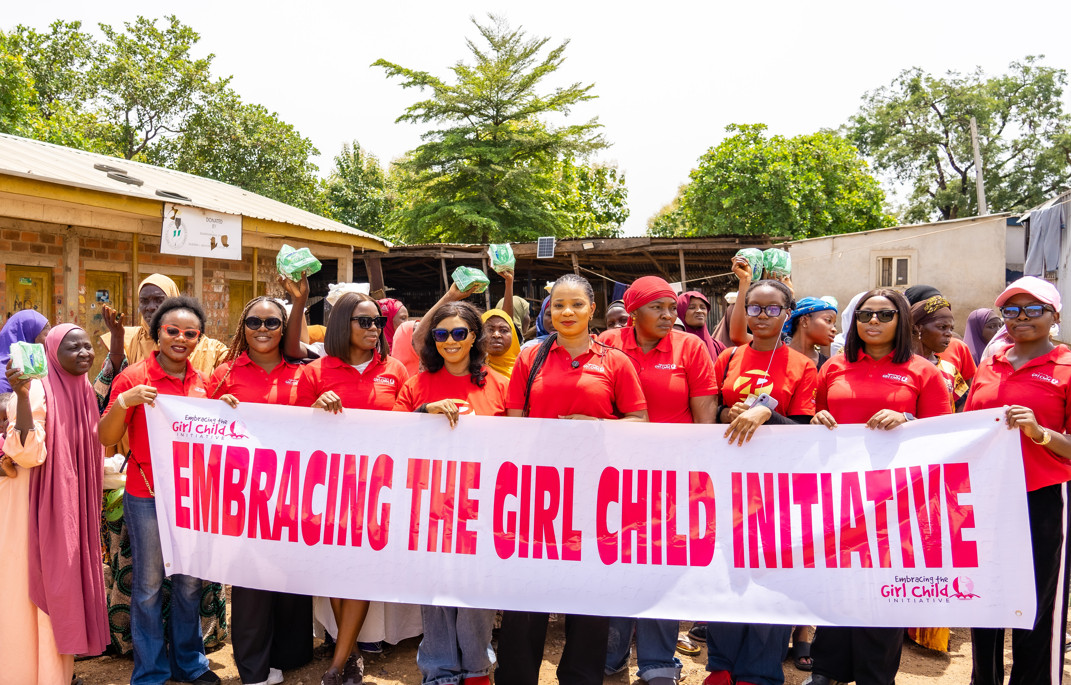
A non-governmental organisation, Embracing the Girl Child Initiative, has called for stronger government intervention and collective action to address menstrual poverty among displaced women and girls in Nigeria.
The appeal was made during an outreach programme held at the Internally Displaced Persons (IDP) Camp, Area One, Abuja, to commemorate the 2026 World Menstrual Hygiene Day.
Speaking at the event, the founder and executive director of the organisation, Barr. Nneamaka Onyema, said the initiative was aimed at educating women and young girls on proper menstrual hygiene while also distributing sanitary materials and postnatal supplies.
According to her, the IDP camp was deliberately selected because displaced women and girls are often neglected and lack access to basic menstrual health education and hygiene products.
“These people are easily forgotten or sidelined in society, and it is important for them to understand the basic knowledge surrounding menstrual hygiene,” she said.
She explained that since 2019, the organisation has carried out similar impactful outreaches across Nigeria, reaching thousands of young girls in secondary schools and vulnerable women through school and street outreach programmes in states including Akwa Ibom and Kogi.
Onyema stressed that menstrual poverty goes beyond the absence of sanitary pads, tampons, menstrual cups, or reusable pads.
“Period poverty is not only the lack of period protection. It is also the lack of information, awareness, and education surrounding menstrual hygiene, and this is the gap Embracing the Girl Child Initiative is committed to bridging,” she added.
The outreach featured the distribution of over 400 sanitary pads, underlay pads, and postnatal medical supplies for pregnant women and nursing mothers, with the aim of impacting more than 400 women and young girls in the camp.
She described the materials distributed as “symbols of knowledge, dignity, and empowerment,” expressing hope that beneficiaries would pass on the knowledge gained within their communities.
Onyema also appealed to other non-governmental organisations to support similar interventions in IDP camps and underserved communities.
“I encourage other NGOs and organisations to key into this kind of outreach and make an impact because these people are easily forgotten in society,” she said.
Addressing the federal government, she urged authorities to improve sanitation facilities and provide free sanitary pads for vulnerable women and girls, particularly those living in IDPs camps.
RELATED NEWS
HURIWA Gives Tinubu 24-Hour Ultimatum To Rescue Abducted Oyo Pupils,Teachers
Troops Rescue 31 Kidnap Victims, Neutralise 5 Terrorists In Zamfara, Katsina Operations
Appeal Court Judgment Not Threat To Okocha-led Executives — Rivers APC
“Sanitary pads are essential for women and girls. This is something we use every month. I look forward to a future where the Federal Government will distribute pads for free in Nigeria to help curb menstrual poverty,” she stated.
She further disclosed that the outreach included menstrual education sessions covering hygiene practices, body changes during menstruation, menstrual cycle calculation, and proper care before, during, and after periods.
Beneficiaries were also taught alternative menstrual protection methods, including reusable pads and locally available options, aimed at ensuring sustainability beyond the outreach.
The event formed part of activities marking the 2026 World Menstrual Hygiene Day, with a focus on promoting dignity, health, and empowerment for women and girls.


This is such an important initiative! I've seen firsthand how lack of menstrual hygiene education affects girls' education. Keep up the amazing work!
Thank you for sharing this. As a teacher, I've seen the difference this education makes. More schools need to implement these programs.
Thank you for your feedback, Amina! We'd love to partner with your school. Please reach out to us through our contact page.
Great article! I'm particularly impressed by the approach of including boys in the education. This is crucial for breaking the stigma.